Monday, October 16, 2017

Nobel Prize Winner, Richard Thaler


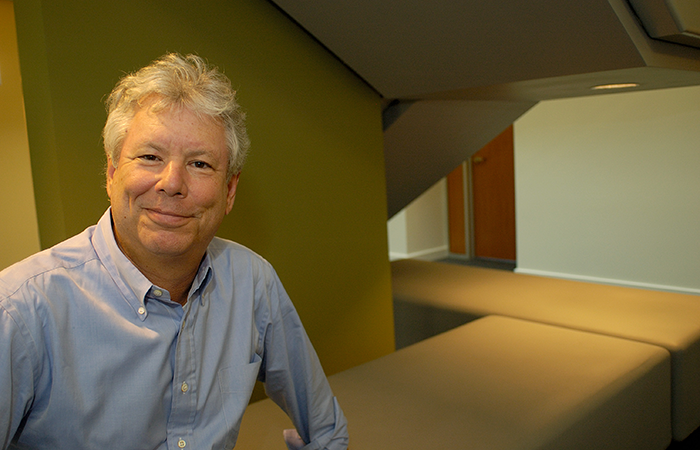
This is a week late, but here is a little info on Richard Thaler who won the Nobel Prize in Economics last week for his work in behavioral economics.
  • Thaler's work essentially combines psychology and economics, incorporating many systematic biases people make in decision-making into economics.
  • Thaler is one of the pioneers of behavioral economics, along with psychologists Daniel Khaneman (who won the Nobel Prize in 2002 - the first psychologist to do so) and Amos Tversky (who passed away in 1996).
    • Thaler says he taught Khaneman and Tversky economics and they taught him psychology while they were all at Stanford together.
    • Khaneman and Tversky are the subject of Michael Lewis' recent book The Undoing Project.
  • Thaler's work spans a wide range of application and has had large influence on public policy in both the United States and United Kingdom. His work impacts default options on retirement plans and organ donations. In the UK, his work helped inspire the Behavioural Insights Team, a government unit that uses explores how behavioral economics can better inform British policies.
  • Thaler recently wrote a book, Misbehaving, about his journey into behavioral economics. This was required reading in my Behavioral Economics class last year and enjoyed by students who found it very accessible. (I'd also highly recommend Khaneman's Thinking, Fast and Slow which students also enjoyed.)
  • Thaler also co-authored the book, Nudge, with Cass Sunstein in which they outline many of their ideas for how behavioral economics can be used by policy makers to help improve social outcomes in a wide variety of settings.
  • Thaler and Khaneman both contributed to the discovery of the Endowment Effect (along with Knetsch) which demonstrates that people value things more after they own them than they do before they own, contradicting assumptions made by traditional economic theory. This is background to the funniest tweet I've seen about Thaler's prize so far:
    • "Now that Thaler has his Nobel Prize, he values it much more than he did before."
Here is a 2-minute video clip of Thaler's appearance in The Big Short, where he explains how overconfidence in risk-taking contributed to the financial crisis in 2007-2008.


For more on Thaler's contributions to economics, I recommend:
I'm a big fan of Thaler's work and am excited to see him win the Prize.

Saturday, December 31, 2016

Much to Be Happy About in 2016

Max Roser on why we have much to be optimistic about last year.  There is a strong negativity bias in the news reported by the media and in the news remembered by individuals.
The consequence of this is that we have no knowledge about the poverty, poor health and the often high levels of violence that characterized our past. It is this ignorance that makes it possible to tell stories of decline, because it means that we are unaware of how inconceivably exceptional our current living conditions are from the perspective of our ancestors. 
The story that we tell about ourselves is the most important story of all. Journalists and intellectuals who almost exclusively focus on what goes wrong risks us losing our faith in one another, and that faith is the essential foundation without which our ideal of a free and democratic society is impossible. A constant supply of news that make us afraid with little to instill trust in one another and in our institutions has always been the best press demagogues can hope for. 
Freedom is impossible without faith in free people, and if we are not aware of our history and produce and demand only the information on what goes wrong, we risk to lose faith in one another.
Roser also has an excellent post highlighting how living conditions have changed around the world over the last 200 years.
The headline could be “The number of people in extreme poverty fell by 130,000 since yesterday.” 

The Guardian also explains why 2016 isn't as bad as you think.

There is much good news going on around the world and much to be thankful for and happy about.

Wishing everyone a very Happy New Year and a great start to 2017!

Tuesday, October 13, 2015

Nobel Prize in Economics Awarded to Angus Deaton

I'm currently down in Panama to investigate bringing students down here over spring break next semester for my Economics of Poverty class.  I returned to Panama City from the Panamanian countryside yesterday to discover that the Nobel Prize in Economics was awarded to Angus Deaton.  Much of Deaton's work involves developing better ways to measure the standard of living of the poor and the impact of economic progress around the world.

The New Yorker has a nice write-up about Deaton and his work.  Here are summaries by Tyler Cowen and Alex Tabarrok.  The Nobel committee also has nice non-technical and technical summaries of his work and why it matters.  David Leonhardt also had a great review of Deaton's work in the New York Times.

Deaton's work is a great example of how to apply economics in ways that help us better understand the world.

P.S. -- Christopher Blattman in Foreign Policy explains why Angus Deaton deserved the Nobel Prize in Economics.

P.P.S. -- Here is a great YouTube video of Deaton discussing his ideas:

Sunday, May 04, 2014

Gary Becker Has Passed Away

Nobel Prize winning economist Gary Becker has passed away. My dissertation drew heavily from his work on the economics of marriage and on Larry Iannaccone's work on economics of religion. Iannacone was a student of Becker's and I was a student of Iannaccone's. Although I never had the chance to meet him, I have always felt like Becker was like an intellectual grandfather to me. 

Becker was a great pioneer for pushing the boundaries of topics studied using economics.  His book, The Economics of Life, was one of the first economics books I ever read and helped get me hooked by demonstrating the breadth of issues economics gave insight into.  

He will be missed.

Thursday, November 28, 2013

Chipotle... and Other Things I'm Thankful For

A few of the things I'm thankful for this Thanksgiving:
  • Faith -- I'm incredibly thankful for my Christian faith. It shapes the core of who I am, gives me purpose and meaning, and a confidence that all things will work out in the end and fills my life with joy, hope and love.
  • Family -- Being so close to them both relationally and physically. To have a family that loves you is one of the most precious gifts anyone could ask for.
  • Friends -- Those in Virginia and around DC, those in Orlando, and those all over the world. I am truly blessed by all of them.
  • Freedom -- I feel blessed to have not only the civil liberties, but by the breadth of opportunities we have in America. There are very few things I would want to do that I am not free to do. I never fully appreciated this until I started traveling to places where this is not true.
  • Technology -- I truly marvel at the many wonders of the Internet, cellular phones, computers, medicine, air transportation, electricity, indoor plumbing, incandescent lighting, automobiles, GPS, iPods, etc. It changes our lives in so many tremendous ways. Thinking about how much the world has changed in the last 100 years makes me feel blessed to live in the time we live in. Being a gadget lover makes the rapid advance of technology all the more enjoyable. I'm thankful for the enjoyment too.
  • Travel -- I've been able to travel to all 50 states, 37 countries, and all 7 continents. There are few things I love more than travel and have been truly blessed in how much of the world I've been able to see.
  • Education -- I also feel incredibly blessed to have been able to have had the opportunities to pursue most of the intellectual pursuits I've wanted and the funding to make it possible.  Today is my one year anniversary of officially becoming Dr. Hollar.
  • Wealth -- Chances are if you're reading this blog, you're one of the wealthiest people to have ever walked the face of this planet. We live in a time of unprecedented abundance -- much of it so ubiquitous we don't even notice it (see the list of technology above). Our lifespans are longer, our opportunities greater, and many things in life are far more convenient than at any time in human history. I may not have all the stuff I'd like to buy, but there is very little I don't have that I truly need.
  • Health -- I am incredibly thankful for my health and to having been nearly doctor-free for years.  I'm nearly in the best shape of my life and in the last 3 years lost and kept off 30 pounds and run my first triathlon.
  • Job -- I absolutely love my job as a professor at Marymount University and am blessed with wonderful students, supportive colleagues, and the ability to teach a subject that I truly believe is meaningful to understand and practical for careers.  I get paid to do what I love and can't imagine anything I would rather spend my life doing.
  • America -- I love my country and the ideals it represents. The more I learn about the founding of the country, the more I feel gratitude and indebtedness for the liberty and institutions that support it that has been passed to this generation of Americans. Our country is not perfect by any means, but I am thankful for our nation and my cultural heritage. There is no other place or time I'd rather live.
  • Humor -- I'm grateful for the ability to laugh and to see humor in life.
  • Economics -- The more I study economics, the more it helps me appreciate the things I have, the wonderfulness of markets, prosperity, and liberty. Next to my Christian faith, I don't think there anything else I have learned that has had a more profound impact on helping me understand and appreciate the things I am blessed with in this life.
  • Where I Live -- I'm currently living in Arlington, Virginia -- two blocks away from the subway, a 10-minute walk to work, and at the footsteps of our nation's capital. I can walk to just about any store or restaurant I want and ride the Metro to anyplace not walking distance from here. As far as pure location goes, this is the best place I have ever lived. (Although living 20-minutes from Disney World had it's perks too.) I am thankful to have a roof over my head, a warm shelter, and a nice place to study, sleep, and relax. Being an hour from mom and dad's and even closer to my brother and his family makes this almost perfect.
  • Chipotle -- This may sound funny, but to me, Chipotle represents the variety and abundance of high-quality, cheap food we have all around us. A trip to Wegman's or your local grocery store underscores this. I've never gone hungry in my life nor have most of my friends. This is incredible by historical (and world) standards and something else I am truly grateful for. In fact, I had my last pre-Thanksgiving meal there and it was good!
I am truly blessed.

Wishing everyone a very happy Thanksgiving!

(NOTE: This is a modified version of a post I originally wrote in 2008.)

Wednesday, May 08, 2013

Eight Days In Maui, No Overhead Bin Required

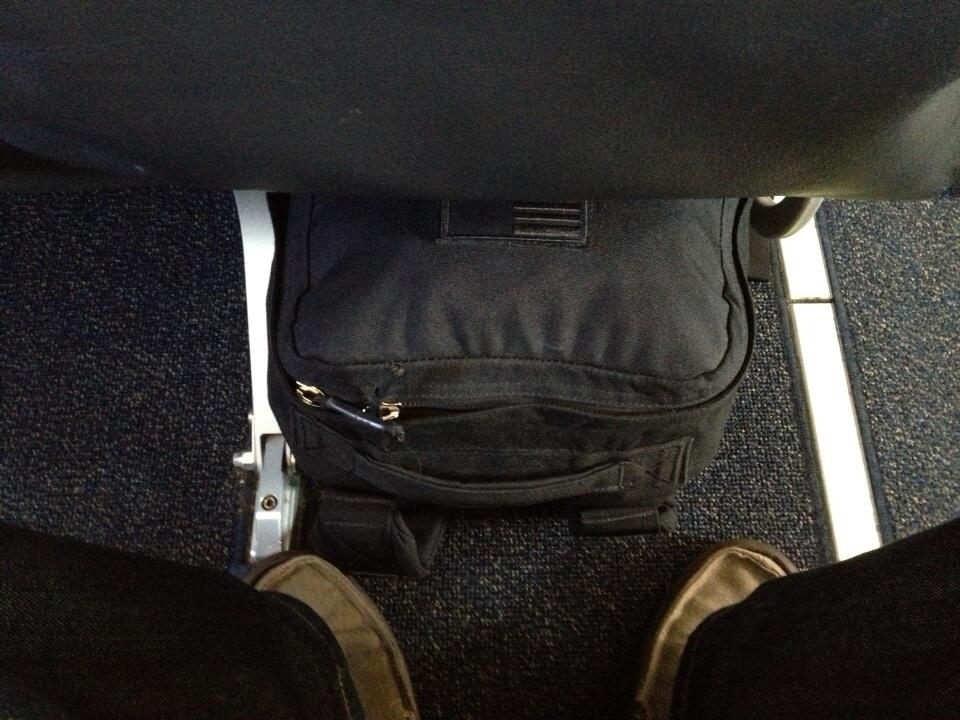
Traveled eight days in Maui without using an overhead bin on the way out or back.  My GORUCK GR1 fit under the seat in front of me both ways.  Had everything I needed for my academic conference, adventures through heat, wet, and cold, and lounging around the resort.

Packed inside the GR1:

  • clothing for an academic conference (long khakis, shorts, tie, two Hawaiian shirts)
  • Eagle Creek Pack-It Folder 18
  • headlamp
  • bathing suit
  • SeV Performance T-Shirt
  • Patagonia long sleeve wool t-shirt (for sunrise at Haleakala)
  • Patagonia Nano Puff (for sunrise at Haleakala)
  • Patagonia Torrentshell Parka (for sunrise at Haleakala)
  • Merrell Trail Glove running shoes (pack down to nothing)
  • 1 pair SmartWool black sock liners (make great daily wear socks & thin enough to dry quickly)
  • 1 pair SmartWool running socks
  • Black Diamond Bbee daypack
  • iPad
  • Zagg Keyboard for iPad
  • MacBook Air 11"
  • 1 pair of ExOfficio boxers
  • 1 pair of triathlon shorts (can be used as backup bathing suit and backup boxers)
  • miscellaneous academic articles
  • sunglasses
  • headlamp
  • Amphipod running belt
  • Thin, plastic folder to keep academic articles and receipts
  • Various pens and highlighters
  • small notepad
  • Ziploc full of toiletries (toothbrush, toothpaste, deodorant, shaving cream, hair gel)
  • Seat to Summit Trek and Travel Pocket Laundry Wash (for washing clothes in the sink)
  • various cables, connectors, batteries, headphones, and chargers for electronics
  • collapsable Patagonia tote/shopping bag
  • monocular

What I wore:

  • long-sleeve button up shirt
  • short-sleeve SmartWool t-shirt
  • blue jeans
  • ExOfficio boxers
  • SmartWool black sock liners
  • SeV Travel Vest
  • Patagonia R1
  • Sanuk Pick Pocket shoes

In my SeV Travel Vest:

  • Kindle Touch
  • Sony RX-100 camera
  • Maui Revealed guidebook
  • iPhone

Made it there and back without checking luggage or using the overhead bin.  Items crossed out were things I either never used or used for a grand total of ~ 10 minutes for the whole trip.  Surprised not to need to MacBook Air (iPad + external keyboard + LogMeIn + desktop PC in office = good enough).  Didn't use my Patagonia Torrentshell, but would have been handy had I put it on before waiting in the high-winds at 5 AM the top of Haleakala, waiting for sunrise.

I should note that on all flights, I had an aisle seat which meant my space under the seat in front of me was narrower than other seats.  The GR1 still fit underneath without any problem.

Had to wash socks and undies to dry overnight each day, but totally worth it.  (Took less than 5-minutes per day.)  Picked up suntan lotion on the island.  Still had room to spare to bring back a few small souvenirs on the way home.

This kit kept me well-prepared for work, conference events, making an academic presentation, snorkeling, hiking through bamboo forests, enduring near-freezing temperatures (although my feet did get a little chilly -- should have doubled up my socks), five hours on horseback, relaxing at the resort, paddleboarding, and more. Had everything I needed.  Brought several things I didn't use.  Nothing left at home that I wish I had brought.

Pack light.  Travel fast.  No better way to go.

Friday, February 22, 2013

Incredible Decrease in Child Mortality Worldwide in Last 50 Years

Another fantastic video by Hans Rosling, showing the incredible decrease in child-mortality around the world in the last 50 years. Along this dimension, the world truly is becoming a better place.


(HT Freakonomics)

Monday, February 18, 2013

The Top 10 Mistakes You Make When Trying to Change Your Behavior


Related:

(HT Eric Barker)

The Economics of Why Children Inherit Their Last Names From Their Father, Not Their Mother

It helps ensure the investment of fathers in the context of paternal uncertainty:
Fathers are therefore expected to invest more heavily in children who bear their last names than children who bear the mother’s last names, because they are more likely to be convinced of their paternity. As a result, ceteris paribus, children who inherit their last names from their fathers are expected to be more likely to survive and thrive than children who inherit their last names from their mothers. Like polyandry, the social institution of matrilineal inheritance of last names contains the seeds of its own extinction. Societies with such an institution are less likely to survive and thrive, because their children are less likely to survive and thrive, which explains why most known human cultures practice patrilineal inheritance of last names, not their matrilineal inheritance or even the system that vos Savant advocates. Worse yet, fathers in societies with the social institution that vos Savant advocates are expected to invest preferentially in sons over daughters, and thus girls are expected to be worse off than boys in such societies.

One of These Things Is Not Like the Other

(via Noah Smith)

Sunday, February 17, 2013

Is America Becoming More Diverse?


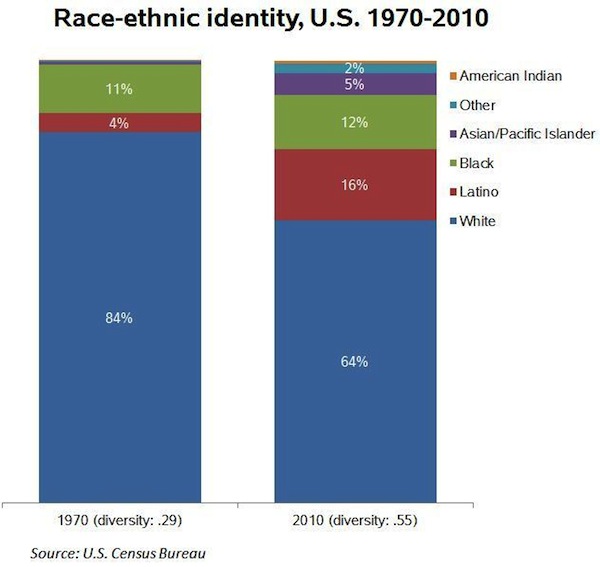
Philip Cohen takes a fascinating look at how America's population has changed since 1972 -- broken down by religion, race, marital status, and age of first marriage.  Lots of changes and increasing diversity on all fronts.
There are various ways of constructing a diversity index, but I use the one sometimes called the Blau index, which is easy to calculate and has a nice interpretation: the probability that two randomly selected individuals are from different groups...

I have complained before that using the 1950s or thereabouts as a benchmark is misleading because it was an unusual period, marked by high conformity, especially with regard to family matters. But it is still the case that since then diversity on a number of important measures has increased. Over the period of several generations, in important ways the people we randomly encounter are more likely to be different from ourselves (and each other).
Read the whole thing.  Lots of interesting graphs.

Saturday, February 09, 2013

What to Expect When No One's Expecting


The title of a new book by Jonathan Last on the declining fertility rates in America and the negative impacts this will have on American society and economy. Here is Last writing in the Wall Street Journal:
The fertility rate is the number of children an average woman bears over the course of her life. The replacement rate is 2.1. If the average woman has more children than that, population grows. Fewer, and it contracts. Today, America's total fertility rate is 1.93, according to the latest figures from the Centers for Disease Control and Prevention; it hasn't been above the replacement rate in a sustained way since the early 1970s. 
The nation's falling fertility rate underlies many of our most difficult problems. Once a country's fertility rate falls consistently below replacement, its age profile begins to shift. You get more old people than young people. And eventually, as the bloated cohort of old people dies off, population begins to contract. This dual problem—a population that is disproportionately old and shrinking overall—has enormous economic, political and cultural consequences... 
Low-fertility societies don't innovate because their incentives for consumption tilt overwhelmingly toward health care. They don't invest aggressively because, with the average age skewing higher, capital shifts to preserving and extending life and then begins drawing down. They cannot sustain social-security programs because they don't have enough workers to pay for the retirees. They cannot project power because they lack the money to pay for defense and the military-age manpower to serve in their armed forces.
Read the whole thing.

(HT Tyler Cowen)

Wednesday, November 28, 2012

I Am Now Officially Dr. Hollar!


I successfully defended my dissertation earlier today and am now officially Dr. Hollar! It has a been a long road getting here, but a journey I am very happy to have both started and finished.

The image above is the introductory slide for my defense presentation. I decided to have a little fun with it.

I am profoundly grateful to my dissertation committee, to GMU, and to all my family and friends who supported me these past few years.  And a special word of thanks to Marymount University who not only provided me with a faculty position prior to graduation, but also gave me the time and support to successfully finish my PhD.  I continue to feel like I landed a dream job in a dream location.

Next stop, tenure!

Monday, November 26, 2012

Tyler Cowen's Favorite Non-Ficton Books of 2012

Tyler Cowen shares his picks:
Arnold Kling adds to the list. 
My additions to the list would include James Manzi’s Uncontrolled, Enrico Moretti’s The New Geography of Jobs (in my opinion, one cannot put Murray on the list and leave out Moretti), Bruce Schneier’s Liars and Outliers (that one does not seem to have impressed anyone else I know), Paul Reid’s completion of William Manchester’s three-volume biography of Winston Churchill, and Jonathan Haidt’s The Righteous Mind (this is on an even higher plane, in my opinion–a candidate for book of the decade? See my review essay.)
I'm afraid I've been too busy working on my dissertation this past year to have much to add.  Hope to remedy that next year.  In the meantime, I just added Murray's Coming Apart and Haidt's The Righteous Mind to my reading list.

Wednesday, November 07, 2012

Everything You Need to Know About the Fiscal Cliff


The Wall Street Journal:
Last August, President Obama and Congress put the U.S. economy on course to go over a "fiscal cliff." WSJ's David Wessel tells you everything you need to know about the "cliff" but were afraid to ask.
(HT Greg Mankiw)

How Did the Prediction Markets Do?

Below is a map showing the results of yesterday's elections.


And here is the map of prediction market forecasts I posted on October 1st.


Florida has yet to be called, but if it goes to Obama, then the prediction markets will have accurately forecasted 50 out of 50 states five weeks before the election.

Here is how the prediction markets fared in 2004 and 2008.  I'd say they nailed it yet again!

Read more of my posts on prediction markets here.

Monday, November 05, 2012

One Last Look At Prediction Markets Before Tomorrow's Election


This is the latest prediction for tomorrow's election on Intrade. These predictions have been remarkably stable since October 1st, with only Florida changing from being likely to vote Democratic to now likely to vote Republican.  Virginia and Colorado have shifted back and forth a bit over the past few weeks, but both are still predicted to go Democratic.

It will be interesting to see the final tally tomorrow night and compare it to Intrade's forecast over a month ago.  If this map matches the final outcomes tomorrow, Intrade will have accurately predicted 49 out of the 50 states one month before the election. 

Stay tuned!

How Powerful Is Your Vote?

When it comes to voting, not all states are created equal.


Garett Jones explains why he loves the electoral college. (For the record, I do too.)

David Henderson explains why it will never go away.

A Campaign Map, Morphed by Money

A very cool animated infographic by NPR on how the US would look if states were resized according to campaign spending. Follow the link for more info.